
- Arrest Records
- Judgments
- Bankruptcies
- DUIs & DWIs
- Felonies
- Warrants
- Jail Records
- Lien Records
- Sex Offenses
- Misdemeanors
- Criminal Records
- Federal Dockets
What are North Dakota Court Records?
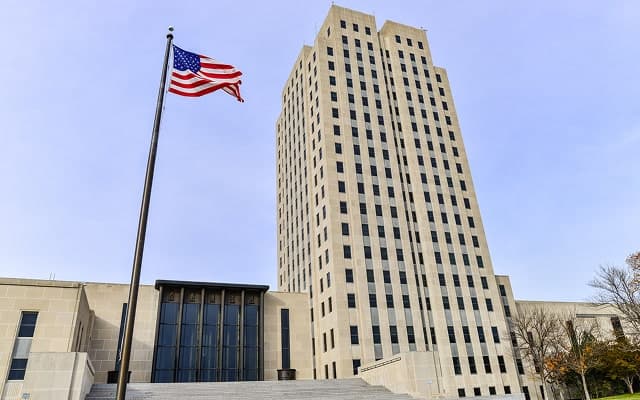
The landlocked Upper Midwest state of North Dakota is named after the indigenous Dakota Sioux. Despite being the country's 19th largest state, its population of less than 784,000 (as of July 2023) makes it the 4th-least populous and 4th most sparsely populated. North Dakota operates a three-level court system comprising Municipal Courts, District Courts, and a Supreme Court. This court system ensures that the rule of law is upheld across the state and provides fair and accessible justice for North Dakotans in all legal issues, ranging from local disputes to significant state matters. It should be noted that capital punishment was abolished in North Dakota in 1973, making it one of 23 states without the death penalty for capital crimes. Remarkably, no federal executions have ever taken place in the state as well.
North Dakota court records refer to any information, in any physical form, that a court in the state receives or creates concerning its activities. There are two main types of court records in the state: administrative records, which are records related to the management, supervision, or administration of a court, and case records, which are records connected to a specific judicial proceeding. Common examples of these case records include:
Transcripts
Written records of spoken words in court proceedings
Sworn Affidavits
Written statements made under oath
Briefs
Written legal arguments presented by attorneys
Court Orders
Official instructions or directives issued by a judge
Judgments and Verdicts
Final decisions in a case made by a judge or jury
Legal Motions
Formal requests made to a court for a specific action
Evidence
Physical objects, documents, or testimony presented in court to prove or disprove facts
Deposition Tapes
Recordings of witness testimonies taken outside of court
Court Minutes
Summaries of court proceedings
Summonses and Subpoenas
Legal documents notifying individuals of a lawsuit and requiring their participation or information
Indexes
Reference tools that list documents and their locations within a court file
Court Calendars
A schedule of court hearings and proceedings
Docket Sheets
Chronological listings of court actions and filings in a case
Register of Actions
An official record of court cases
North Dakota court records are generally considered open and are made available to interested members of the public for inspection and copying. However, access to some court records (or information in a record) may be restricted to protect sensitive information and individual privacy. These restricted records include details on jurors, juvenile and adoption records, domestic violence protection orders, and sealed case records.
Types of Court Cases
The North Dakota court system hears several kinds of legal matters, ranging from infractions and local ordinance violations to aggravated assault cases, contract disputes, and family law-related issues. These legal matters are broadly categorized into two main types: criminal cases, which involve violations of criminal laws, and civil cases, which address personal and financial disputes.
Criminal Cases
Criminal cases in North Dakota involve actions that violate provisions of local and state criminal laws. These actions are considered offenses against society; as such, they are prosecuted by State Attorneys on behalf of the state (and the victim of the crime). Criminal offenses in North Dakota are classified into three types based on the severity of the crime and the penalties involved:
- Felonies: these are the most severe crimes in North Dakota, punishable by long-term imprisonment of more than a year (at least) and fines exceeding $3,000. Examples include aggravated assault, armed robbery, drug trafficking, and murder. Felonies are further divided into four groups: class AA, class A, class B, and class C. Class AA felonies are the most severe and carry a maximum penalty of life imprisonment without parole, while class C felonies are the least serious, with a maximum penalty of five years imprisonment and/or a $10,000 fine.
- Misdemeanors: these are less severe offenses than felonies and are usually punishable by shorter jail terms and smaller fines. Examples include domestic assault, disorderly conduct, and prostitution. There are two types of misdemeanors in North Dakota: class A and class B. Class A misdemeanors can result in up to one year in jail and a $3,000 fine, while class B misdemeanors can result in up to 30 days in jail and a $1,500 fine.
- Infractions: these are the least severe types of offenses and usually involve traffic violations. Infractions do not typically result in jail time; instead, they are punishable by fines of up to $1,000 or alternative sentencing (like traffic school). However, individuals who commit three infractions for the same offense within one year can be charged with a class B misdemeanor, which carries potential jail time.
The criminal process in North Dakota typically begins with an investigation into the alleged crimes, followed by an arrest. The State's Attorney then files charges against the defendant (the person accused of the crime), who will be required to enter a plea of either guilty, not guilty, or no contest. If the defendant pleads "not guilty", the case goes to trial. Trials are usually by jury unless the defendant waives their right to a jury trial (with the consent of the prosecuting attorney and the court's approval). During trials, the burden is on the State's Attorney to prove the defendant's guilt "beyond a reasonable doubt" to secure a conviction. This high standard of proof is a unique feature of criminal cases. If the defendant is found guilty, they may appeal the conviction.
Civil Cases
Civil cases in North Dakota address disputes between individuals, businesses, or organizations. Common examples of these cases include:
- Personal injury claims
- Contract disputes
- Family law cases
- Property disputes
- Small claims cases
- Probate and guardianship matters
The primary focus of civil cases is resolving conflicts between aggrieved parties and providing remedies, which often include monetary compensation. Civil cases are initialed by private parties (unlike criminal cases, which a State's Attorney must initiate) and begin with the plaintiff (the initiating party) filing a complaint against the defendant. The defendant is then notified of the lawsuit. Civil cases usually involve a pre-trial conference to iron out the issues and explore settlement options. Many civil matters often end at this stage. However, if the case proceeds to trial, the plaintiff must prove their case by "a preponderance of the evidence", meaning that the evidence they present must be more convincing and credible than the evidence presented by the defendant. This standard of proof is considerably lower than what applies to criminal cases.
What Are the Different Courts in North Dakota?
North Dakota has a unified court system with the Supreme Court at the top, eight judicial districts of state district courts, and locally based municipal courts, funded by a judicial branch appropriation of about $131 million for the 2023–2025 biennium. The state has no permanent intermediate appeals court.
| Court Level | Court Name | Jurisdiction | Key Functions |
|---|---|---|---|
| Appellate | Supreme Court | Statewide; one chief justice and four justices | Final appeals from district courts, original writs, attorney discipline and administration of all non-federal courts. |
| Appellate | Temporary Court of Appeals | Appeals assigned by the Supreme Court | Three-judge panels hear appeals referred by the Supreme Court to relieve its caseload. |
| General Jurisdiction | District Courts | Eight judicial districts; 53 counties | Hear felony and misdemeanor criminal, civil, domestic relations, probate, small claims, traffic and juvenile cases. |
| Limited Jurisdiction | Municipal Courts | 73 city courts | Handle violations of city ordinances, including local traffic and minor offenses, without juries. |
How Many Federal Courts Are in North Dakota?
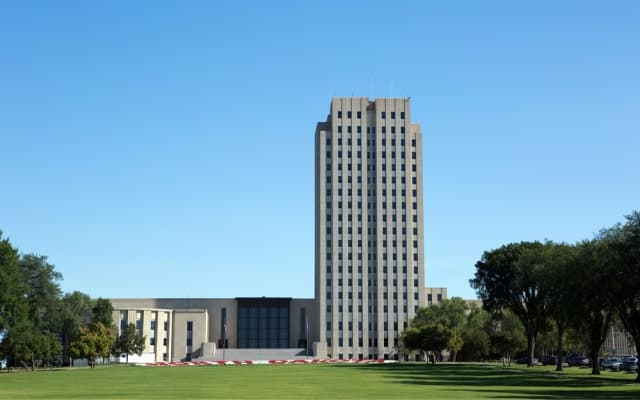
North Dakota has one federal court: the United States District Court for the District of North Dakota, which is headquartered in Bismarck and has additional locations at Fargo, Grand Forks, and Minot. This court exclusively handles criminal and civil matters involving federal laws. This includes civil cases between residents of different states that involve more than $75,000, disputes involving federal agencies, and constitutional issues. The federal court also has a specialized Bankruptcy Court for bankruptcy cases.
Appeals on decisions reached by the United States District Court for the District of North Dakota are heard by the United States Court of Appeals for the Eighth Circuit. This appellate court also covers Arkansas, Iowa, Minnesota, Missouri, and Nebraska.
How Many Court Cases Are Filed Each Year in North Dakota?
North Dakota's district courts received 168,304 new cases in calendar year 2024, with traffic matters making up about 62% of the total. Courts disposed of more cases than they received, for a combined clearance rate of about 100%.
| Case Type | Annual Filings | % of Total | Common Offense/Subtype | Clearance Rate |
|---|---|---|---|---|
| Traffic | 103,839 | 61.7% | Administrative traffic citations and infractions | 103% |
| Criminal | 26,963 | 16.0% | Misdemeanors (63%), felonies (28%), infractions (9%) | 95% |
| Civil | 22,618 | 13.4% | Contract and collection, forcible detainer, civil commitments | 99% |
| Small Claims | 2,557 | 1.5% | Consumer and contract disputes in small claims court | 101% |
| Domestic Relations | 6,468 | 3.8% | Divorce, protection orders, child support, paternity, adoption | ~99% |
| Juvenile | 1,859 | 1.1% | Delinquency, unruly and deprivation matters | 87% |
| Other | 4,000 | 2.4% | Probate and guardianship | ~99% |
| Total | 168,304 | 100% | — | 100% |
How Do I Look Up Court Cases in North Dakota?

North Dakota court records are maintained by Clerks of Courts, who are also tasked with providing interested members of the public with access to the records for inspection and copying, as appropriate. To this end, you can look up court cases in North Dakota and obtain copies of these records by contacting the Clerk of Courts office at the court that handled the case in question. Many Clerks of Courts provide several options for accessing court records, which typically include in-person, email, mail-in, and online/remote access. Note that you may be charged a fee to copy court records – this fee is usually determined by the nature of your request and the number of copies you wish to obtain.
The North Dakota court also provides a centralized District Court Case Search platform that you can use to remotely access case information for criminal, traffic, and civil matters. You can conduct searches on this platform by case type, party/attorney name, case status, and date.
Number of Active Judges — State & Federal
North Dakota has 114 state judges and justices across its Supreme Court, district courts and municipal courts, plus one sitting federal district judge. District and Supreme Court judges are elected in nonpartisan elections, while the federal judge is nominated by the President and confirmed by the Senate.
| Court | Jurisdiction | Active Judges | Selection Method |
|---|---|---|---|
| North Dakota Supreme Court | Statewide appellate | 5 | Nonpartisan election; 10-year terms; vacancies filled by gubernatorial appointment |
| District Courts | General jurisdiction, eight judicial districts | 55 | Nonpartisan election; 6-year terms; vacancies filled by gubernatorial appointment |
| Municipal Courts | City ordinance violations, 73 courts | 54 | Elected or appointed by the city, depending on the municipality; 4-year terms |
| U.S. District Court, District of North Dakota | Federal district court | 1 | Nominated by the President and confirmed by the U.S. Senate; life tenure |
| Total Active Judges | — | 115 | — |
What Court Records Are Not Available to the Public in North Dakota?
Under North Dakota law, court records are generally considered open and accessible to interested members of the public for inspection. However, certain records (or information contained within the records) are also statutorily protected and deemed confidential. These include:
- Adoption records
- Juvenile records
- Juror information
- Applications/petitions for domestic relations-related protection or restraining orders
- Victim contact information in a criminal or delinquency case (this is usually made confidential if requested by the victim)
Confidential records can typically only be accessed by authorized parties, usually law enforcement officials and individuals with a court order granting them access to the record.
Sealed court records are also considered confidential and generally inaccessible to the public (and most employers). However, law enforcement and certain government agencies may still access the sealed records for specific purposes, like background checks or investigations. Records eligible for sealing typically include non-violent offenses or those involving juveniles; violent felonies and offenses that require registration on a sex offenders list cannot be sealed. The individual must also meet specific criteria, such as having no new convictions for at least three to five years before filing a petition to seal their records.
North Dakota also allows for the expungement of criminal records; this involves the deletion and destruction of all information related to the record. However, expungement is currently limited to the following cases:
- Convictions resulting from being a victim of human trafficking
- First-time marijuana possession (up to one ounce) with no other convictions within two years
- Juvenile delinquency or unruly records
- Records of DNA profiles if the related arrest didn't result in a felony conviction or was overturned
- Records of unconstitutional arrests
Average Case Processing Time & Clearance Rates
Case processing times in North Dakota differ by case type, from administrative handling of traffic citations in a matter of weeks to several months for criminal and civil cases. The times below combine published figures with estimates under the state's case management time standards.
| Case Type | Court Level | Average Processing Time | Description | Clearance Rate |
|---|---|---|---|---|
| Traffic & Parking | General Jurisdiction | ~1–2 months | Most citations are handled administratively by payment or a plea with little judicial involvement. | 103% |
| Small Claims | General Jurisdiction | ~2–3 months | Cases are resolved by default, settlement or a short bench hearing before a district judge or referee. | 101% |
| Misdemeanor Criminal | General Jurisdiction | ~3–5 months | Cases proceed from arraignment to plea, with a minority resolved at bench or jury trial. | ~95% |
| Civil Cases | General Jurisdiction | ~8–12 months | Contract, collection and eviction cases resolve mostly through default, settlement or dismissal. | 99% |
| Domestic Relations | General Jurisdiction | ~5–9 months | Divorce and custody cases resolve by settlement or judgment after a required waiting and mediation process. | ~99% |
| Felony Criminal | General Jurisdiction | ~6–7 months | Felonies move through arraignment, discovery and plea negotiation; average filing-to-disposition time is about 190 days. | ~95% |